New build and expansion
Service station construction
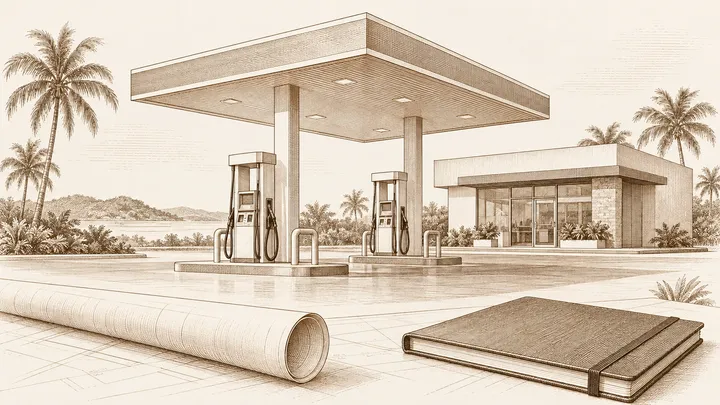
A service station is a high-risk, regulated industrial civil work, not a retail shop with a roof bolted on. The decisions made on the drawings — tank material, line depth, canopy diameter — translate into 20 or 30 years of operation, or into costly remediations.
What it is
We support the construction of new stations and the expansion of existing sites in Panama, from technical feasibility through to commercial opening. Timing varies with the site, design, studies, applicable procedures, equipment and execution conditions, so we do not publish a universal duration. We organize the work into six phases: feasibility, design and procedures, civil and underground works, structure and canopy, electromechanical installation, and testing with document closeout.
The civil and structural works phases are the most sensitive to Panama's rains: where possible, we schedule the underground work for the dry season (January–April). Early decisions — site, tank type and applicable environmental review — shape the project's safety, maintainability and total cost.
Applicable regulations
The design and permitting phase is where most projects fall behind. The procedures run partly in parallel, but with dependencies between agencies:
- MIAMBIENTE — environmental impact assessment when applicable. The current framework and project conditions determine the category, studies and required content.
- MICI / sector authority — station registration and hydrocarbon requirements under the current procedure; SNE retains its applicable energy-policy responsibilities.
- ATTT — authorization of road accesses (curb radii, distance to intersections, deceleration lane where applicable).
- Municipality — construction permit and verification of land use; not every urban zone allows a service station.
- Fire Department — sign-off of the fire protection system on NFPA drawings and a final certificate after the work.
The exact route depends on the site, scope and current rules. See the EIA framework published by MIAMBIENTE and the official service-station registration procedure on Panamá Digital.
Process
- 01Feasibility and due diligence: vehicle access, zoning, safety distances, hydrogeology and lot geometry.
- 02Design and procedures: drawings, environmental review, and the applicable sector, road-access, municipal and safety processes.
- 03Civil and underground works: excavation, tanks, lines, anti-flotation anchoring, API separator and slab.
- 04Structure and canopy: clearance height, slope and drainage, anchoring to slab and the store building.
- 05Electromechanical installation: dispensers Wayne, ATG and tank monitoring, fire protection system and POS.
- 06Testing and document closeout: initial tightness testing, metrological control and support for inspections by the applicable authorities.
Related case
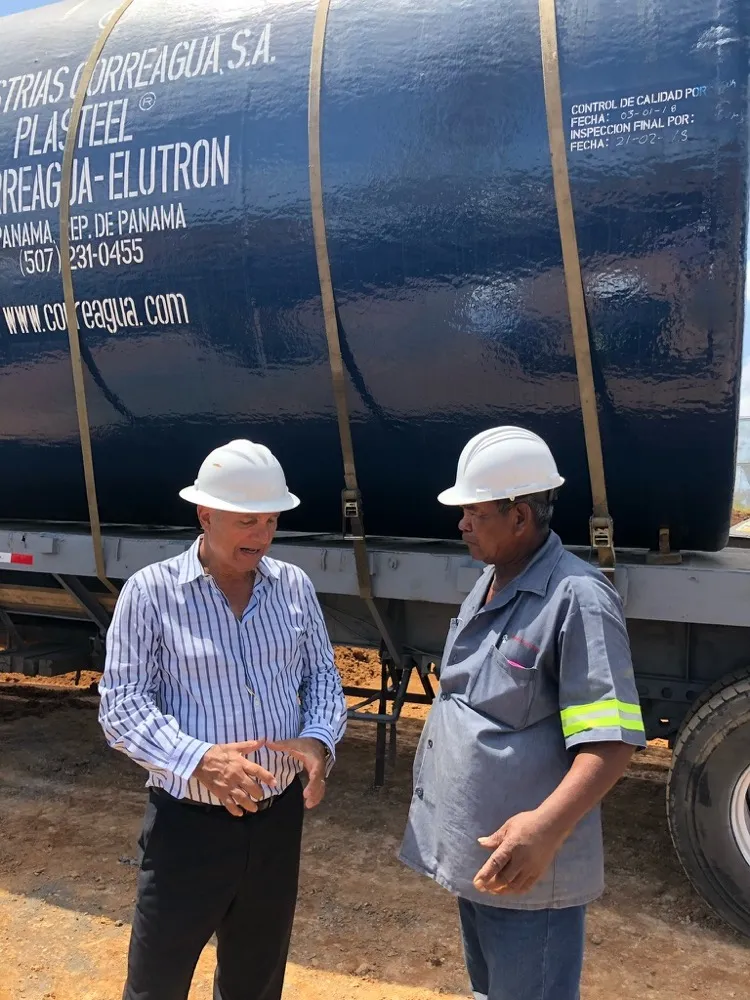
In underground work for chains like Delta, Texaco and Terpel we have worked on tanks at operating stations. At Delta Galápagos (Petróleos Delta) we replaced underground tanks, phasing the work in stages.
Decision facts
- Who it is for
- New-build or expansion of service stations in Panama, from technical feasibility through commercial opening.
- Not for
- A retail fit-out that only adds a canopy, or projects outside Panama. A station is regulated high-risk industrial civil work.
- Coverage
- Nationwide in Panama. Logistics are confirmed with the province and site access.
- Operating station
- For expansions or replacements, work can be staged. There is no universal yes: it depends on the lot, tanks and which dispensing must continue.
- What you get
- Support through feasibility, design and permits, civil and underground works, canopy, electromechanical installation, testing and document closeout.
- How to quote
- Send the lot location and a preliminary scope. We do not publish a universal duration or price.
- Office hours
- Monday–Friday 07:00–16:00; Saturday 07:00–13:00. Field work is scheduled per site.
Frequently asked questions
- How long does it take to build a service station?
- The schedule changes with the land, design, studies, permits, equipment and site conditions. That is why we do not publish a universal duration.
- Which procedures are involved?
- Depending on the lot and scope: MIAMBIENTE environmental review when applicable, sector registration, ATTT for road access, municipal construction permit and Fire Department approval. The exact path is confirmed against current rules.
- Can you work on a station that is still dispensing?
- For replacements and expansions, work can be staged to reduce impact on dispensing. The plan depends on tanks, lines and site operations.
- When is underground work preferable in Panama?
- Civil and structural phases are the most rain-sensitive. Where possible, underground work is planned for the dry season (January–April).
- Do you publish a price per square meter?
- No. Total cost depends on the lot, tank type, permits and execution conditions. Technical feasibility comes first.