Technical articles
Blog
Suspension of Bill 443: what it means for station operators in Panama
June 23, 2026 · The Assembly suspended debate on Bill 443 and the SNE rescinded the E10 schedule. What it means for station operators and what to do during the pause.
Tightness testing before and after loading E10: why two tests, not one
June 16, 2026 · Why it pays to tightness-test before the first E10 load and repeat at ~3 months. How ethanol exposes pre-existing leaks and what a baseline test protects.
Adapting fuel stations to E10: what changes, what doesn't, and when to act (Bill 443, Panama)
June 9, 2026 · Bill 443 (E10) is a suspended draft bill in Panama: today there is no obligation and no deadline. We explain which parts ethanol degrades, how to tell if your station is ready, and when it pays to act.
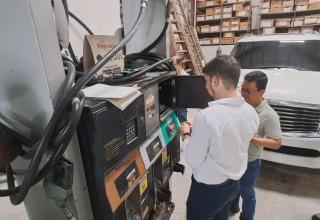
Wayne, Gilbarco and Tokheim against E10: compatibility table by brand for stations in Panama
May 26, 2026 · Comparative table of E10 compatibility for the three most common dispensers in Panama — Wayne, Gilbarco and Tokheim. Which generation is E10-ready, which requires a retrofit and what to check by brand.
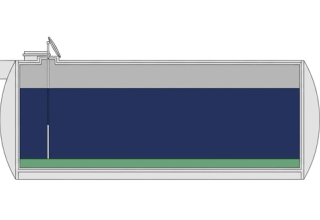
Phase separation in E10 gasoline: why it happens, how to detect it, and what to do when it appears
May 19, 2026 · What phase separation in E10 gasoline is, how to detect it in Panamanian tanks, what causes it, and the protocol when it appears. A practical guide for operators.
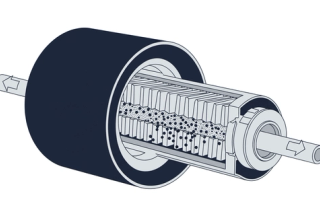
Dispenser filters for ethanol-blended fuel in Panama: specs, models, and when to change them
May 12, 2026 · Which filters to use on E10 fuel dispensers in Panama, Cim-Tek models and alternatives, micron rating, water-phase detection, and a replacement schedule.
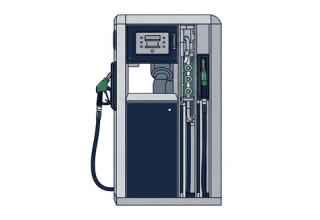
Wayne pumps and E10 in Panama: compatible models, retrofit kits and what happens to the old ones
April 28, 2026 · Which Wayne dispenser models are E10-compatible in Panama, what retrofit kits exist for the old ones, and how to evaluate whether to replace or adapt
E10 ethanol conversion guide: the six steps of a technical retrofit
April 14, 2026 · How an existing service station is adapted to run on E10 ethanol: inspection, replacement of incompatible components, deep cleaning, calibration.
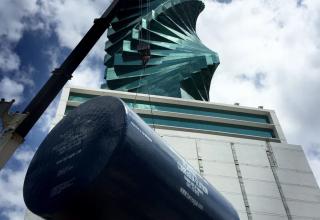
Underground fuel tank installation guide (PEI RP100)
March 24, 2026 · A poorly executed underground tank installation is not discovered on ribbon-cutting day: it is discovered years later, when the backfill gives way or the cathodic protection never closed the circuit. This guide follows the flow of PEI RP100-17.
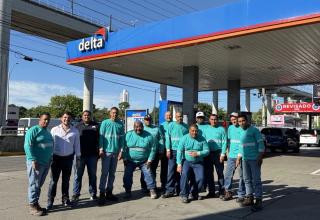
Fuel station maintenance in Panama: what is done, how often, and the warning signs not to ignore
March 10, 2026 · A technical guide for operators: what preventive maintenance of a station in Panama includes, recommended frequencies, and the signs that indicate you must intervene sooner.
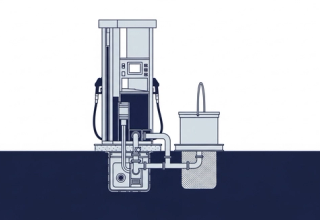
Sumps and spill buckets at fuel stations: inspection, draining, and spill prevention
February 17, 2026 · How to inspect and maintain dispenser sumps and spill buckets at Panamanian stations. Frequency, failure signs, and spill prevention under MIAMBIENTE.
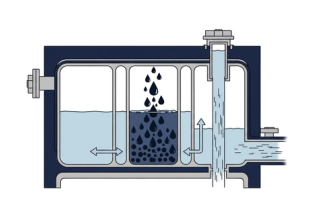
Oil/water separator (API separator) at fuel stations: operation, cleaning, and MIAMBIENTE compliance
January 27, 2026 · How the oil/water separator (API separator) operates at Panamanian stations, cleaning frequency, MIAMBIENTE compliance, and the consequences of omitted maintenance.
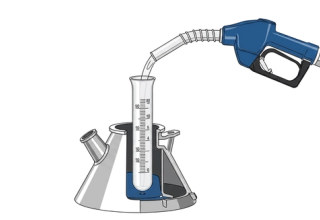
How to tell if a dispenser is miscalibrated: operational signs and the prover test
January 13, 2026 · Operational signs of a miscalibrated dispenser (inventory variance, per-hose pattern) and how verification works with a certified 5-gallon prover
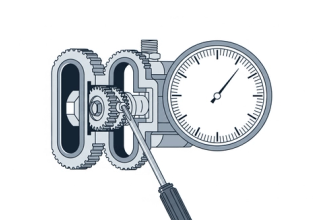
Fuel dispenser calibration in Panama: what ACODECO requires, how it's done and what happens if it fails
December 9, 2025 · An operator's guide: what ACODECO metrological calibration measures in Panama, the allowed tolerance, the mandatory frequency and how to prepare to pass without findings
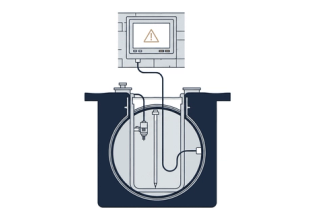
Automatic Tank Gauging (ATG) alarms: how to interpret Veeder-Root, INCON and OPW
November 18, 2025 · How to interpret Automatic Tank Gauging (ATG) alarms at Panamanian stations. Veeder-Root, INCON and OPW alarm types, what they mean and what to do
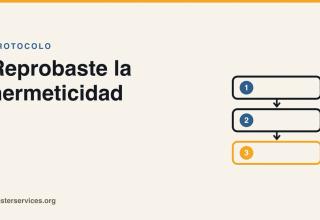
You failed the tightness test: a step-by-step protocol to resolve it
October 28, 2025 · Your station failed the tightness test. A step-by-step protocol to locate the leak, decide on the repair, document the remediation plan, and pass the retest.
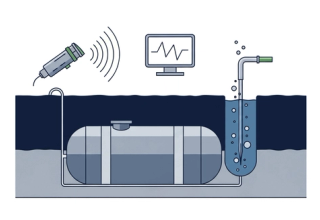
MESA 2D vs SIR vs Tracer Gas: which tightness-testing method the Fire Department (DINASEPI) requires and which one is right for you
October 7, 2025 · Technical comparison of tank tightness-testing methods for Panamanian stations: volumetric MESA 2D, statistical SIR, and tracer gas. Which one the Fire Department (DINASEPI) requires and when to use each.
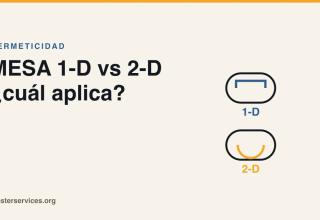
The difference between MESA 1-D and MESA 2-D: which test applies to your station
September 16, 2025 · The two modes of the ATS MESA tightness test: 1-D applies positive pressure to the vapor portion; 2-D applies vacuum to the complete tank. When each is used.
How to prepare your station to pass the tightness test on the first try
August 26, 2025 · A practical preparation guide for tank tightness tests in Panama. Pre-inspection, tank conditions, documentation, and common mistakes that cause failures.
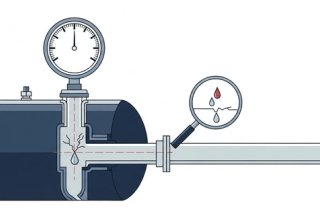
tightness testing in Panama: what it measures, when it's due, and how to keep it from costing you your station
July 29, 2025 · A practical guide for station operators in Panama: what the Fire Department (DINASEPI) requires in tightness tests, what MESA 2D measures, how often it's due, and how to prepare to pass.
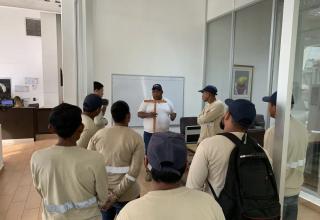
Technical documentation checklist for SNE filings in Panama
July 1, 2025 · What documents the client should keep and what Master Services delivers at the close of a job: MESA test record, signed technical report, and photographic record.
How to choose a tightness-testing company for your station in Panama
June 3, 2025 · Seven objective criteria for evaluating a tightness-testing provider: internationally recognized equipment, trained personnel, specific track record, international memberships
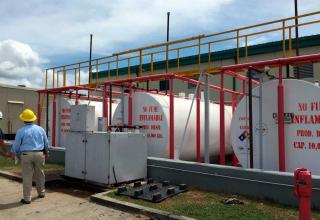
Preventive Maintenance Guide for Fuel Storage Tanks
May 6, 2025 · A well-built preventive maintenance program for underground tanks prevents leaks, fines, and shutdowns. This guide builds it component by component, with frequencies by standard.
Preventive maintenance checklist for fuel stations
April 8, 2025 · An actionable checklist for operators: what to check every 30 days, every year, and every 3 years at a fuel station, with the items that fail most often.
Fuel station maintenance: what you need to know
March 11, 2025 · What a station manager or owner needs to understand about maintenance: the four blocks, the signs that precede a failure, the applicable regulations, and what it costs not to do it.
Oil spills
February 18, 2025 · What to do after a fuel spill at a station: containment, characterization, soil remediation, and reporting to MIAMBIENTE. A practical guide for operators in Panama.