Assessing stations for ethanol blends: what to document today
The planned implementation is suspended; useful work now is component inventory and configuration-level verification against manufacturer documentation.

President & Owner, Grupo Master
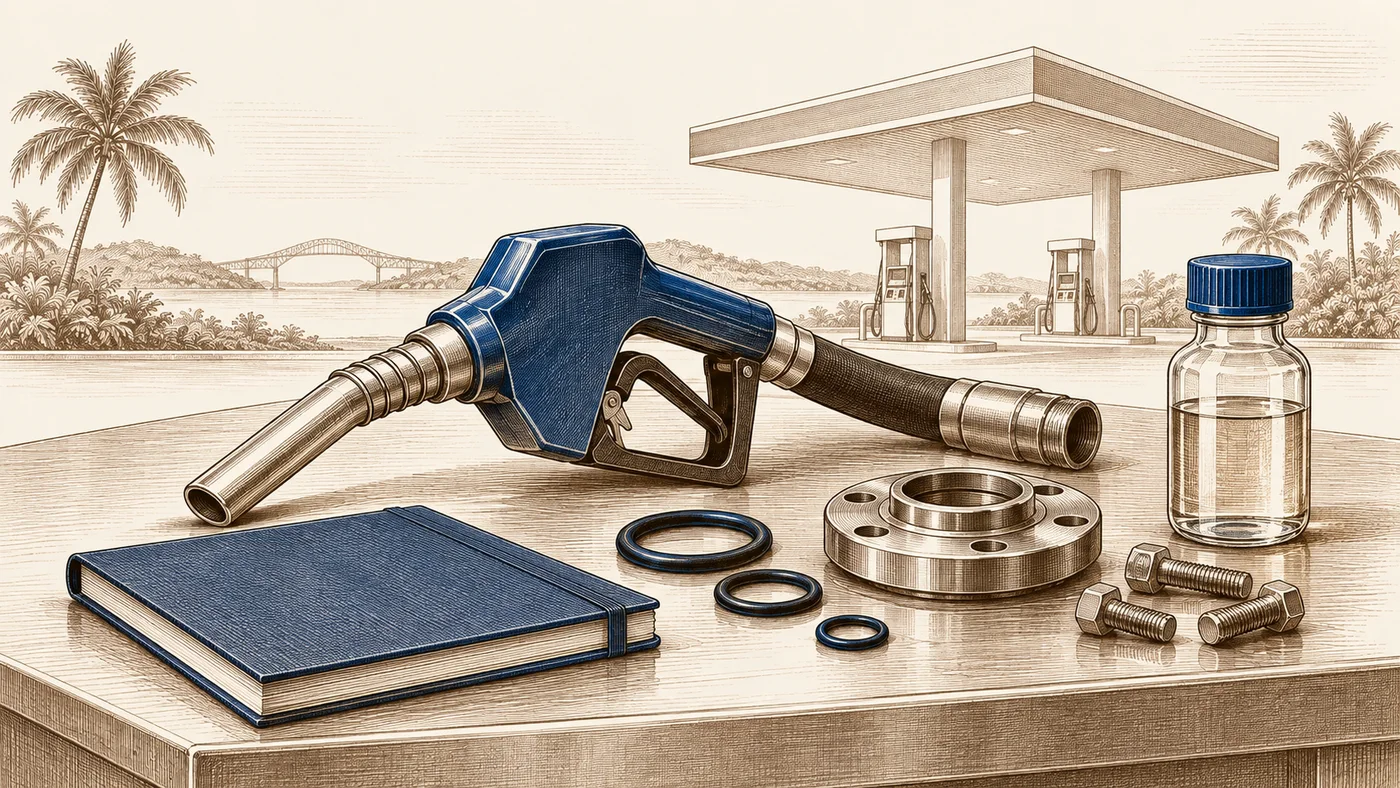
About this image
AI-assisted editorial illustration. Not a product photograph, installation drawing or test procedure; consult the applicable technical documentation.
In this article
Assessing a station for an ethanol blend does not start with a universal parts list. It starts with current regulatory status and exact identification of every component.
Status verified on September 4, 2026
Resolution MIPRE-2026-0010986, published on March 25, 2026, suspended implementation planned for April 1, 2026 until the necessary technical, regulatory and market conditions exist. It also voided the previous schedule and assigned the SNE to establish a new one through a reasoned resolution. We did not locate a new active date in the official sources reviewed.
Bill 443 advanced to second debate and appears as “Suspendido” in the official agenda located for April 28, 2026. This status must be checked again before recommending dates or investments.
Inventory before conclusions
Record manufacturer, model, product number, configuration and material for tanks, lines, pumps, hoses, nozzles, filters, meters, seals and monitoring systems. Station age or dispenser brand does not prove compatibility.
Exact documentation
Locate the document that applies to each unit and blend. Catalogs from OPW, documentation from Wayne/Dover Fueling Solutions and manuals from Gilbarco show that compatibility is stated by product and configuration, not by a general brand rule.
Decision matrix
Classify each item as confirmed, incompatible or pending evidence. “Pending” is the correct result when the nameplate, revision or listing is insufficient. Only then should the team decide whether to keep, inspect, replace or consult the manufacturer.
What an assessment should not promise
It should not invent a degradation period, guarantee future tightness or assume one standard retrofit fits every model. The useful deliverable is a traceable matrix showing the source used and the gaps that remain open.
Practical component-by-component assessment path
A defensible review separates confirmed facts from items that still need evidence. First identify the installed unit, then locate the exact manufacturer publication, and finally record one decision per component. This sequence avoids buying a generic package that may not match the actual configuration.
| Element | Minimum evidence | Possible decision |
|---|---|---|
| Tank and piping | Manufacturer, model, material, year, and applicable documentation | Confirmed, incompatible, or pending |
| Pump and dispenser | Nameplate, serial number, configuration, and manufacturer bulletin | Keep, inspect, or consult |
| Hose, nozzle, and seals | Part number and compatibility statement | Keep or replace with an identified part |
| Filters and monitoring | Specification, available alarms, and current manual | Define operational control and record |
“Pending” is not a defect in the report. It is a signal to stop a conclusion that still lacks a nameplate, listing, or sufficient revision. Master Services' E10 compatibility assessment starts with this traceability rather than automatic replacement.
What a useful assessment should deliver
The deliverable should identify the station and cutoff date, list reviewed components, link or cite every source, and separate immediate actions from pending consultations. It should also record who will validate the final decision when the manufacturer does not publish enough information. To understand the complete system before reviewing individual parts, see the E10 learning path.
- Inventory with legible photographs of nameplates and part numbers.
- Compatibility matrix with source, edition, and consultation date.
- List of gaps requiring a manufacturer, distributor, or further inspection.
- Phased plan separating assessment, purchasing, installation, and verification.
Change control
The matrix needs a version and owner. When a meter, hose, or seal is replaced, record the removed part, installed part, and source supporting the new decision. This prevents a sound assessment from becoming obsolete after an undocumented repair.
Frequently asked questions
Does the suspended schedule mean the station should not be reviewed?
No. It means a suspended date should not be presented as an active obligation. A technical inventory remains useful for maintenance, replacement, and planning as long as it is not sold as a requirement or official date that does not exist.
Does the dispenser brand confirm ethanol compatibility?
Not by itself. One brand may have different families, revisions, meters, hoses, and seals. The conclusion must reach the applicable model, configuration, and document.
Should parts be purchased before the matrix is complete?
Only when a need has been identified and the proposed part matches the installed unit. Buying first can create unusable inventory and break the decision trail.
Next step
Gather nameplate photographs, available manuals, and change history. If you need to turn that information into a component-level matrix, request a technical review and preserve the regulatory cutoff date used for the decision.