Resource center
Master University
What a station manager needs to understand before deciding: how what is underground works, what the regulation requires in Panama, and how it all keeps running. Experience since 1978, organized by topic.
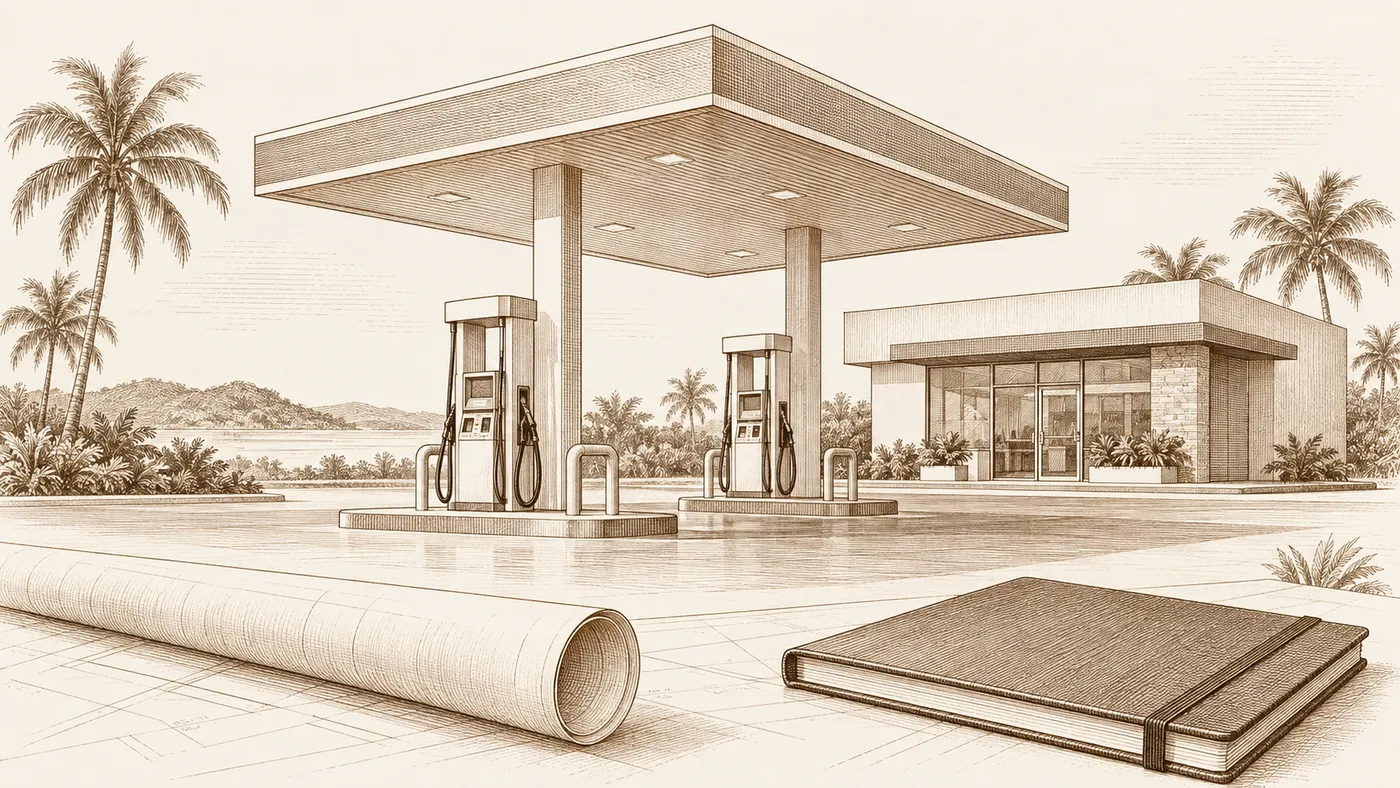
Image details
Created with AI assistance; not an installation drawing.
Tightness and testing
A tightness test evaluates a tank or line within a defined scope and under specified conditions. It is not a visual inspection and does not replace the authority's decision. Here we explain how MESA 2D works, what limits the method, and how to interpret the next step.
Explore02E10 ethanol
Compatibility assessment follows the manufacturer, model, configuration and technical listing for each component. Official program status and dates can change; see the regulatory-status article in these resources before recommending investments.
Explore03Tanks and pumps
Almost everything that makes a station run is underground: the tank, submersible pump, lines and sumps. Here we explain how those components relate and how to review a calibration chart, always against the design, manufacturer documentation and requirements that apply to the installation.
Explore04Dispensers
The dispenser is the visible point where fuel is authorized, measured and delivered. An unusual reading or flow requires identifying the unit and recording the symptom before any intervention. Here we cover system components, observable signs and when to escalate a fault to qualified personnel.
Explore05Regulation and compliance
Operating a station in Panama means consulting the correct authority and instrument for each procedure. Here we organize official sources by topic, scope and verification date. When a frequency or requirement is not supported by a current source, we state that it must be confirmed with the authority.
Explore06Maintenance
A maintenance program organizes the condition, history and servicing of each subsystem. ATG consoles, leak detection, separators and dispensers require different scopes. Here we bring together preparation checklists, escalation criteria and closeout documentation practices.
ExplorePEI · Technical library
Go to the source.
Three starting points to keep learning about the equipment at your station.
Master Services is a member of the Petroleum Equipment Institute (PEI), an international trade association for the fuel and energy handling equipment industry.
Membership is not a technical certification or an endorsement by PEI of our services or Master University.
- Recommended practices
Explore the PEI catalog: RP500 for dispensing equipment, RP900 for underground storage system inspection and maintenance, and RP1200 for testing protective systems. Manuals are available for purchase; check the edition and language before consulting them.
- Component compatibility
Find manufacturer statements for underground storage equipment. Confirm the model, configuration and fuel blend: PEI hosts these documents but does not guarantee their accuracy or completeness.
- Spanish-language learning
Explore PEI webinars for Spanish-speaking industry professionals. Check each event for its topic, date, registration and access conditions.
External resources published by PEI. We link to the originals without reproducing manuals or courses. These references do not replace applicable requirements in Panama, manufacturer instructions or a qualified technical assessment.
Does your station meet the standard?
Schedule an evaluation with a specialist who knows your station and Panama’s regulations.
Request an evaluation
Image details
AI-assisted editorial engraving. Not a photograph of a Master Services project.