Wayne dispensers and E10: how to verify a specific unit
Brand alone does not establish compatibility: identify model, configuration and product number before deciding to keep, consult or replace.

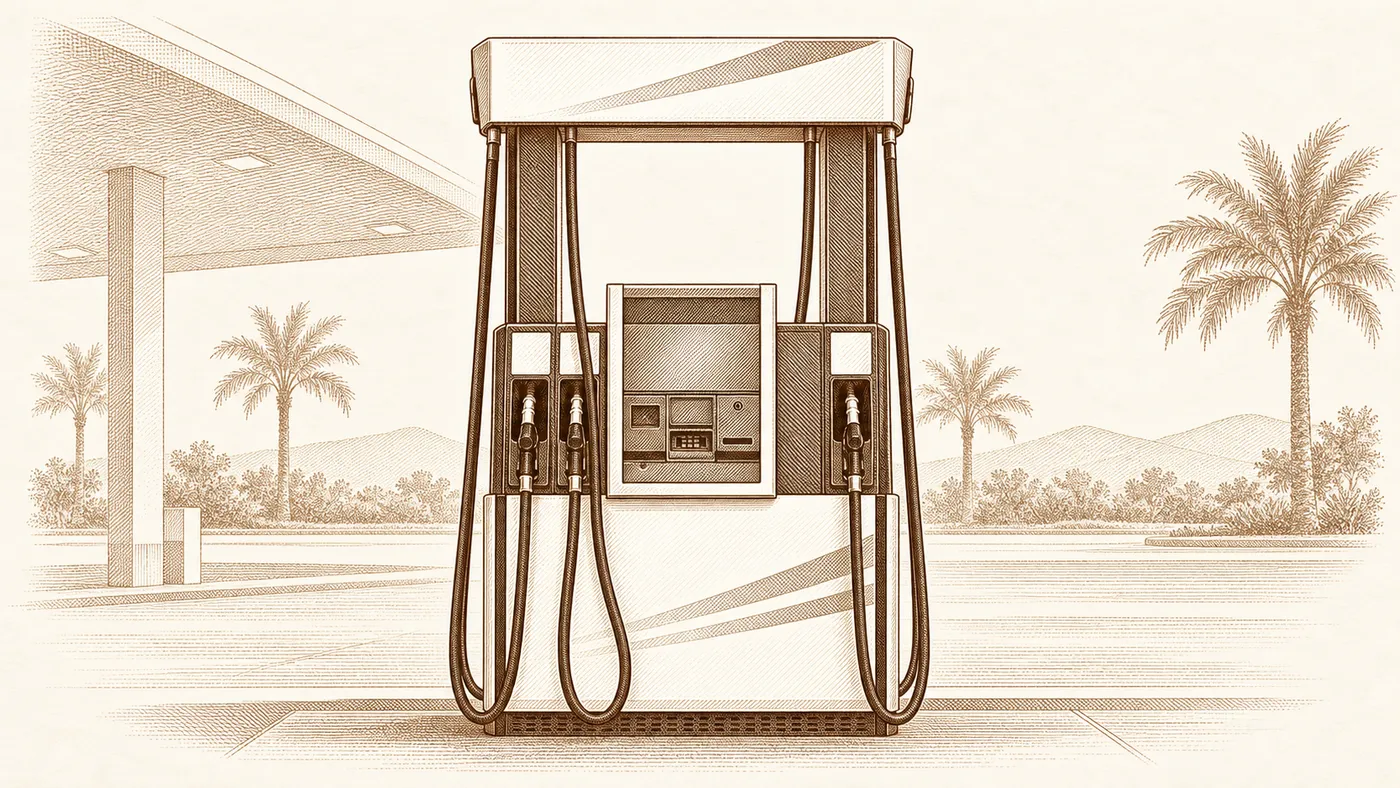
About this image
AI-assisted editorial illustration. Visual reference: Wayne Helix / Dover Fueling Solutions. Not a product photograph, installation drawing or test procedure; consult the applicable technical documentation.
In this article
- 01Start with the nameplate
- 02Find the exact document
- 03Avoid the “standard kit” shortcut
- 04Document the decision
- 05Panama context
- 06Minimum inventory for a Wayne dispenser
- 07Building the compatibility matrix
- 08Handling a pending status
- 09Frequently asked questions
- 10Application record: compatibility of a Wayne unit
Two Wayne dispensers can share a logo and require different decisions. Compatibility with an ethanol blend is verified in documentation applicable to the unit, not in a general age-based table.
Start with the nameplate
Record model, serial number, configuration, revision and installed components. Identify the meter, hose, nozzle, breakaway, filters, seals and any previous kit separately. If the nameplate is not legible, the conclusion remains pending.
Find the exact document
Documentation from Wayne/Dover Fueling Solutions illustrates how a product is offered with specific configurations and compatibility statements. That document proves only what it states for the listed product; it does not make an entire brand or every model compatible.
Avoid the “standard kit” shortcut
A generic retrofit name does not establish that every part matches the installed unit. Before quoting, compare part numbers, revision, admitted blend and installation requirements. Items without evidence remain pending.
Document the decision
The matrix should state component, identification, source, edition and status: confirmed, incompatible or pending. The keep, replace or consult decision is made by item and may require direct manufacturer validation.
Panama context
Implementation planned for April 2026 was suspended by Resolution MIPRE-2026-0010986 and the previous schedule was voided. No new active date was located as of September 4, 2026. A technical inventory is useful, but it should not be sold as a nonexistent regulatory emergency.
Minimum inventory for a Wayne dispenser
The dispenser nameplate is the starting point, not the conclusion. Record model, serial number, year when shown, hydraulic configuration, meter type, hose, nozzle, swivels, breakaways, seals, filters and replaced components. Photograph readable labels and map each fueling position to its product. A cabinet may retain its original brand while containing parts from several generations.
The Wayne Select specification describes specific product options and configurations; it does not by itself establish compatibility for every Wayne unit. Compare installed part numbers with exact manufacturer documents. When a reference is missing, record “pending confirmation,” not “compatible because of age.”
Building the compatibility matrix
| Component | Identification | Source | Status |
|---|---|---|---|
| Meter or pump | Model and serial | Manufacturer manual or statement | Confirmed, incompatible or pending |
| Hose and accessories | Part number and marking | Component data sheet | Confirmed, incompatible or pending |
| Filter | Model, thread and function | Filter manufacturer | Confirmed, incompatible or pending |
| Serviced seals | Kit and date | Parts list | Confirmed, incompatible or pending |
Our six-step E10 adaptation guide shows how to turn that matrix into an action plan.
Handling a pending status
Do not replace the entire dispenser by default. First locate the manual for the variant, ask the manufacturer or distributor and determine whether a documented kit exists for that configuration. Keep chemical compatibility, approval for use and physical condition separate: a part may be specified for a blend and still be damaged.
Panama’s previously published implementation schedule was suspended by Resolution MIPRE-2026-0010986. That creates room for evidence-based planning, but it does not support assuming that the matter has been permanently canceled. Check official status before purchasing or converting equipment.
Frequently asked questions
Does the dispenser year determine compatibility?
No. It can guide the document search, but the decision depends on model, configuration and installed components.
Does one kit convert every Wayne unit to E10?
That should not be assumed. The kit must be documented for the exact unit and configuration.
Is an inspection useful while the schedule is suspended?
Yes as asset management. Inventory and documentation can be completed without committing to premature purchases.
Application record: compatibility of a Wayne unit
Before applying this guide to a facility, identify model, serial and every component in the wetted path. Write the decision as a verifiable question: whether the installed configuration is documented for the intended product. A recommendation without an asset, question and date is difficult to audit and may continue circulating after the facility has changed.
- Input: nameplates, part numbers, manuals and physical condition.
- Source: retain the title, issuer, edition or date, link and section used.
- Owner: assign who confirms data, who authorizes action and who verifies closeout.
- Status: use confirmed, pending, not applicable or out of scope; do not fill evidence gaps by assumption.
Retain the version that supported the decision and record differences between the plan and field conditions. If the product changes, a part is replaced or a new document becomes available, reopen the record instead of reusing the earlier conclusion. This keeps the article a working framework rather than a substitute for the manual, design, risk assessment or responsible authority.
Continue learning in Master University. To review a real case, share the inventory, legible photographs, objective and available documents through our contact page; a responsible technical recommendation begins with scope.