MESA 1-D and MESA 2-D: how to confirm the applicable method
Why the commercial name is not enough: scope must be confirmed against the exact method listing, system and site conditions.
Head of Operations

About this image
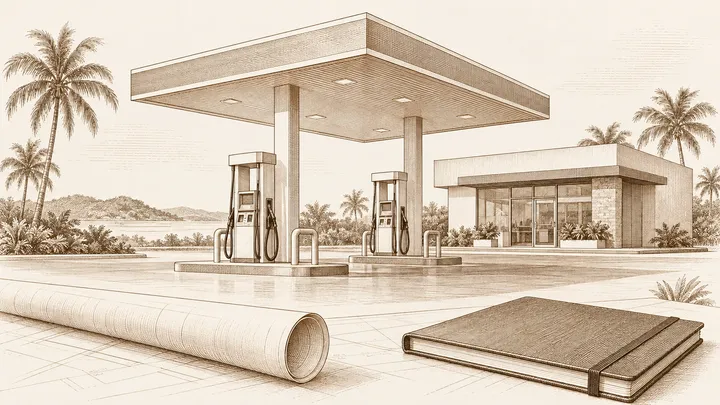
AI-assisted editorial illustration. Not a product photograph, installation drawing or test procedure; consult the applicable technical documentation.
In this article
- 01What is documented for MESA 2-D
- 02Why extrapolation is risky
- 03Questions that define scope
- 04Relationship to the Panama procedure
- 05How to build a comparison that can be audited
- 06What the final report should say
- 07Signs of a weak proposal
- 08Frequently asked questions
- 09Application record: selection between MESA methods
The names MESA 1-D and MESA 2-D should not be used as if they represented interchangeable scopes. Before scheduling a test, identify the exact method listing and confirm that its conditions correspond to the system.
What is documented for MESA 2-D
The independent MESA 2-D evaluation classifies it as a nonvolumetric method. It applies vacuum to the tank ullage and uses acoustic signals to detect air ingress, together with a separate water-ingress sensor. The listing identifies capacities, levels, products, waiting time and other limitations.
Why extrapolation is risky
Two methods sharing a manufacturer or equipment family does not prove that they cover the same part of the system, have the same conditions or produce the same kind of evidence. The applicable documentation must be consulted for MESA 1-D; this article does not assign unsupported characteristics to it.
Questions that define scope
- Which tank, line or component needs evaluation?
- What are the product, capacity and level?
- Which exact listing or edition does the provider propose?
- Which conditions can invalidate or limit the test?
- What information will the report include?
Relationship to the Panama procedure
Panamá Digital assigns inspection of fuel-storage facilities to BCBRP/DINASEPI. The authority defines the procedure and reviews submitted evidence; the equipment name alone does not guarantee acceptance or certification.
The correct decision follows identification of the system, objective and method documentation. If an applicable listing is missing, the responsible status is “pending confirmation.”
How to build a comparison that can be audited
Ask each proposal to state the manufacturer, exact method name, edition or listing consulted, included assets, product, capacity, required level, stabilization time and causes of an inconclusive result. Also record whether lines and containment are included or only the tank. This matrix prevents similarly named proposals from appearing equivalent when they assess different systems.
For MESA 2-D, keep a copy or link to the consulted listing and its access date. The manufacturer’s frequently asked questions can clarify operation, while the evaluation listing is the source for understanding the conditions behind published performance. If MESA 1-D is proposed, request the specific documentation for that variant instead of filling gaps by analogy.
What the final report should say
A traceable report identifies the facility, tank, product, capacity, level, method, equipment, date, technician, conditions and result. It also states limitations, excluded components and recommended actions. “The station passed” is too broad when only one tank was evaluated. “Failed” does not automatically identify a cause or location and may require additional diagnosis.
Use the pre-test checklist to prepare assets and history. To understand how evidence fits the procedure, see the technical-documentation guide.
Signs of a weak proposal
- It promises certification or approval before identifying the system.
- It does not identify the method’s technical document.
- It treats a performance figure as a field reading.
- It does not separate tanks, lines, containment and monitoring.
- It does not explain conditions that can invalidate a result.
The decision should not follow the most familiar name. It should match the question, system, method and evidence required for the purpose.
Frequently asked questions
Is MESA 1-D a smaller version of MESA 2-D?
The name proves neither hierarchy nor scope. Exact documentation for each method is needed before comparison.
Does a favorable result cover the entire station?
It covers only the assets and conditions identified in the report. Lines, sumps or other components may require separate scopes.
Who confirms whether the report supports the procedure?
The operator should verify that with BCBRP/DINASEPI for the specific case; the provider explains its method and deliverable.
Application record: selection between MESA methods
Before applying this guide to a facility, identify exact method, listing, tank, product, level and scope. Write the decision as a verifiable question: which method is documented to answer the site question. A recommendation without an asset, question and date is difficult to audit and may continue circulating after the facility has changed.
- Input: published conditions, proposal, field data and report.
- Source: retain the title, issuer, edition or date, link and section used.
- Owner: assign who confirms data, who authorizes action and who verifies closeout.
- Status: use confirmed, pending, not applicable or out of scope; do not fill evidence gaps by assumption.
Retain the version that supported the decision and record differences between the plan and field conditions. If the asset, level, objective or applicable listing changes, reopen the record instead of reusing the earlier conclusion. This keeps the article a working framework rather than a substitute for the manual, design, risk assessment or responsible authority.
Continue learning in Master University. To review a real case, share the inventory, legible photographs, objective and available documents through our contact page; a responsible technical recommendation begins with scope.