Tank tightness
MESA 2D Testing
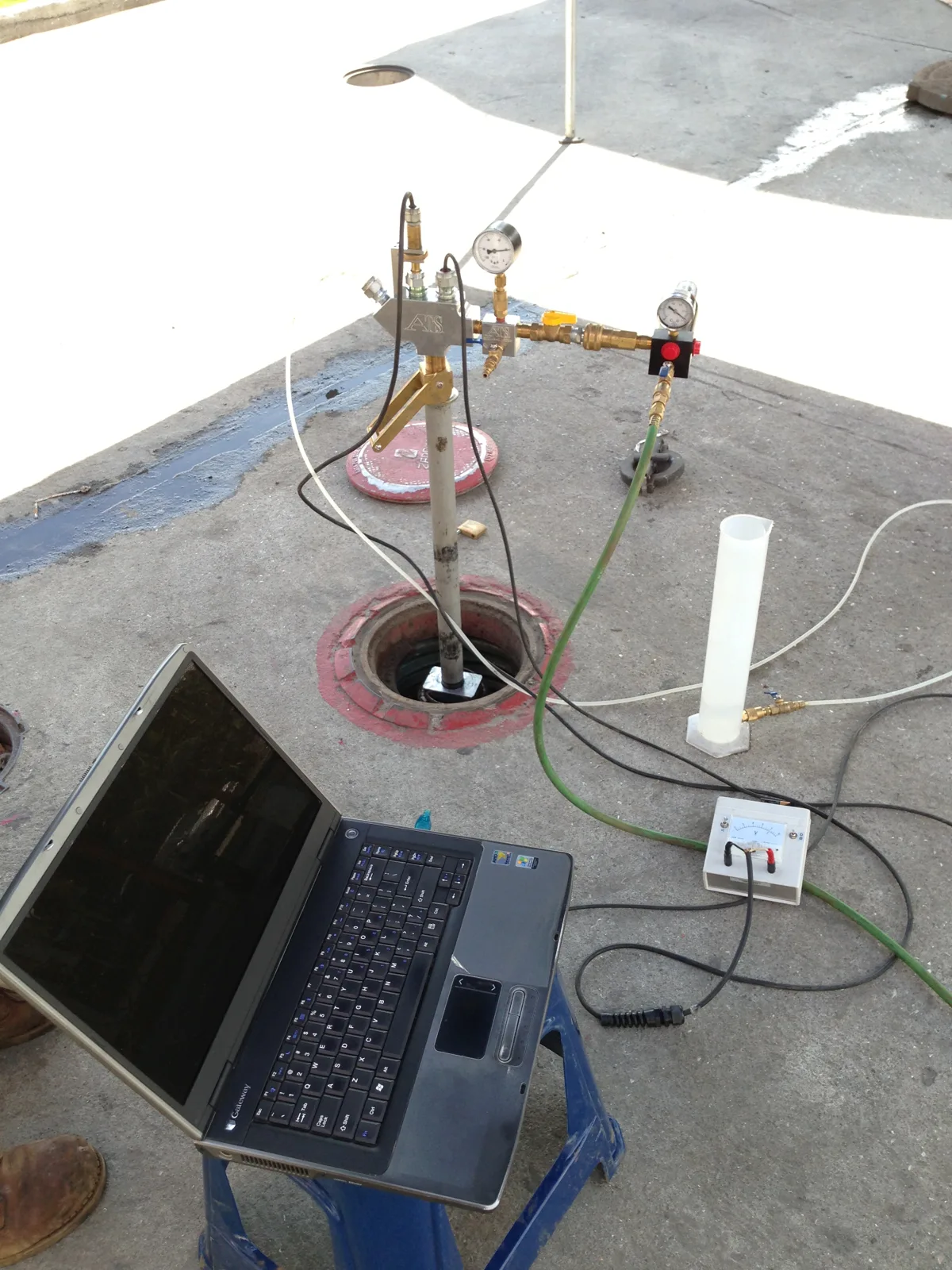
We evaluate underground tank tightness with the MESA 2D nonvolumetric method and document the result within the tested scope.
What it is
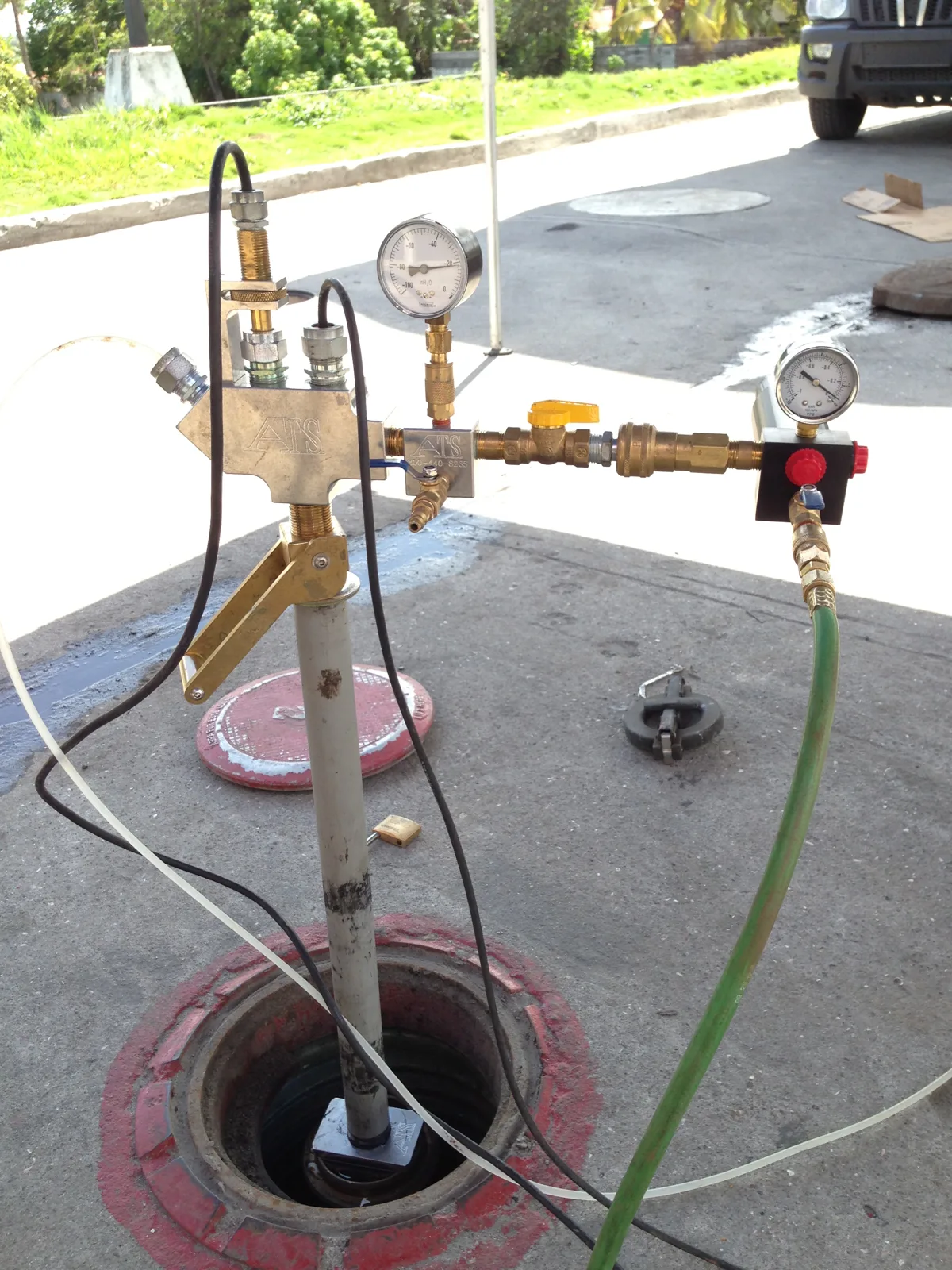
MESA 2D is a nonvolumetric method for evaluating underground tank tightness. It applies a vacuum to the tank ullage and analyzes acoustic signals that may indicate air ingress.
A separate sensor checks for water ingress. Tank capacity, product level, groundwater and the stored fuel are among the conditions reviewed before the method is applied.
MESA 2D is the method used to run the test; the station's official certificate is issued by the Fire Department (DINASEPI). If you need the full process, see hermeticity certification with the Fire Department.
Technical source and scope
The independent technical listing published by the California State Water Resources Control Board certifies the method at a leak rate of 0.1 gallon per hour, with a 100% probability of detection and a 1.6% probability of false alarm, under the conditions stated in that listing.
That specification describes the method's evaluated performance. It is not a volumetric reading produced by every test and does not establish a regulatory requirement in Panama by itself. DINASEPI defines the documentary scope for inspection and certification of each facility.
Process
- 01Review of scope, capacity, product, level and groundwater conditions.
- 02Preparation of connections and equipment configuration for the identified tank.
- 03Application of vacuum and recording of acoustic signals and the water-ingress sensor.
- 04Delivery of the report with the scope, conditions and result under the method criteria.
- 05If the result does not meet the criterion, definition of the next diagnostic and response steps.
How it compares
MESA 2D evaluates tank tightness. SIR analyzes inventory records, while tracer gas uses a different detection procedure. Fire Department certification is a separate process.
- MESA 2D
- Nonvolumetric tank method: vacuum, acoustic signals and water ingress. It delivers a scoped report, not the station certificate.
- SIR
- Statistical inventory reconciliation. It analyzes data series; it is not the same test as MESA 2D.
- Tracer gas
- Looks for a gas under its own protocol and equipment. It should not be treated as equivalent to MESA 2D.
- Certificate
- Issued by the Fire Department (DINASEPI). The provider documents the test; the authority decides the procedure.
Longer comparison: MESA 2D, SIR and tracer gas and MESA 1-D versus MESA 2-D. Procedure: support for Fire Department certification.
Frequently asked questions
- What does the MESA 2D tightness test detect?
- MESA 2D applies a vacuum to the tank ullage and analyzes acoustic signals that may indicate air ingress. A separate sensor checks for water ingress. The result is interpreted using the criteria and limitations in the method listing.
- How often should the test be done?
- Frequency depends on the scope requested by DINASEPI, the station certification conditions, the system history and any intervention or sign of a leak. The BCBRP publishes a one-year validity for the station Hydrocarbon Certification; confirm with DINASEPI which tests and documents apply to each renewal.
- Can the station keep dispensing during the test?
- The operating condition depends on the tank, product, test scope and station configuration. Before scheduling the test, we define which equipment must be out of service and which operations can continue safely.
- What happens if the tank does not pass?
- The report documents the result within the tested scope. A result that does not meet the criterion requires review of the report, use of the facility response procedure and definition of the next diagnostic step; the test does not always locate the ingress or release point by itself.
- What does the 0.1-gallon-per-hour rate mean?
- The independent evaluation consulted certifies MESA 2D performance at a leak rate of 0.1 gallon per hour, with a 100% probability of detection and a 1.6% probability of false alarm, under the listing conditions. It is not a volumetric reading produced by every test or a universal regulatory threshold.
- How much does a MESA 2D test cost?
- The cost depends on the number of tanks to be tested and the stored product. Request a quote and we assess your station to give you an exact price.
- Is MESA 2D the same as SIR or tracer gas?
- No. MESA 2D evaluates the tank with vacuum, acoustic signals and a water sensor. SIR analyzes inventory time series. A tracer-gas method looks for the gas under its own protocol. None of those tests issues the station certificate: that belongs to the Fire Department (DINASEPI).
Before scheduling
Confirm the identification, capacity, product and level of each tank, together with the objective of the test. To understand the method and its limitations, see the Master University tightness guide.