What to do after an adverse tightness-test result
A sequence for control, scope review, diagnosis and documentation without treating the result as a volumetric reading or promising a repair.
Head of Operations

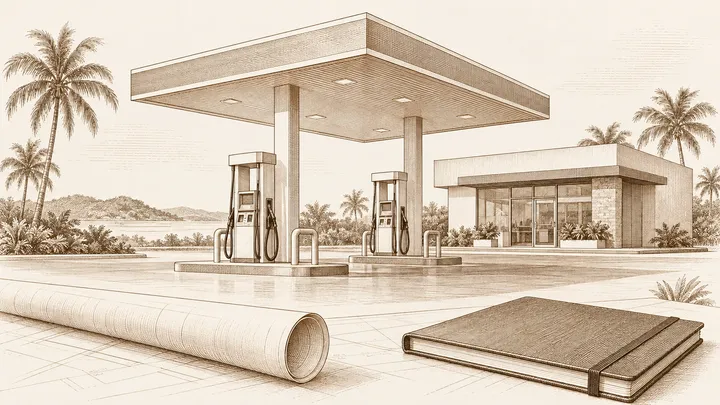
About this image
AI-assisted editorial illustration. Not a product photograph, installation drawing or test procedure; consult the applicable technical documentation.
In this article
- 011. Follow the response procedure
- 022. Review the report and scope
- 033. Separate finding from cause
- 044. Document decisions and changes
- 055. Coordinate the procedure
- 06Opening an investigation without losing evidence
- 07Diagnostic decision tree
- 08Communication and the technical file
- 09Frequently asked questions
- 10Application record: investigation of an adverse result
A result that does not meet the method criteria should not be treated as a simple paperwork issue. It also does not establish, without diagnosis, which component failed or how much product was released.
1. Follow the response procedure
Keep the area safe, notify the facility lead and follow the internal plan. If there is evidence of a release, water, vapors, an alarm or immediate risk, the priority is risk control and coordination of applicable measures and notifications.
2. Review the report and scope
Confirm system identification, method, conditions, included components and result classification. For MESA 2-D, the independent listing describes a nonvolumetric method based on vacuum, acoustic signals and a water sensor. The 0.1-gallon-per-hour figure belongs to the method evaluation under defined conditions, not a volume automatically measured in each test.
3. Separate finding from cause
The result may justify further diagnosis, but it does not always locate the ingress or release point. The tank, connections, lines and other components should be investigated according to scope, without changing parts at random or claiming that one repair will solve the issue.
4. Document decisions and changes
Record the finding, immediate measures, inspections, intervened components, closeout evidence and basis for the next step. If scope changes, state clearly what was evaluated before and what will be evaluated afterward.
5. Coordinate the procedure
Repeating a technical test does not replace DINASEPI inspection or guarantee certification. Confirm with the authority which report, validity and documentation apply to the facility.
Master Services can review the report and quote diagnosis, repair and another evaluation separately. Scope is defined from evidence, not an advance guarantee.
Opening an investigation without losing evidence
Preserve the original report, available raw data, equipment identification, conditions, photographs and the time of every later intervention. Assign an owner and an operating status to the asset. Immediate decisions depend on observed risk, the site’s safety procedures and the competent authority; a web article cannot replace that evaluation.
Do not clear alarms, change levels to force another test or replace several parts at once without recording the reason. If everything changes together, the team cannot determine which finding explained the result.
Diagnostic decision tree
- Validate scope: correct asset, applicable method, complete data and valid conditions.
- Review independent indications: inventory, water, alarms, containment, visible connections and repair history.
- Select a diagnostic test: choose it for the hypothesis, not by habit.
- Correct with traceability: part, reference, technician, date and closeout evidence.
- Reassess when appropriate: the method and scope should answer the corrected condition.
Review the comparison of MESA 2-D, SIR and tracer gas before assuming that any one method always locates the cause.
Communication and the technical file
The operator should confirm with BCBRP/DINASEPI how a result or correction is handled in the specific case. Panamá Digital identifies the inspection authority, but it does not make this article an official procedure. In the file, link the initial result, diagnosis, repair order and closeout verification; do not overwrite the original record.
Master Services can quote diagnosis, repair or a new assessment as separate scopes. That separation shows which evidence supports each decision and prevents a repair from being presented as a certification guarantee.
Frequently asked questions
Does an adverse result identify the leak location?
Not necessarily. The result answers the method’s scope and criterion; locating a cause may require another investigation.
Should the test be repeated immediately?
There is no universal answer. First validate the report, preserve safety and define which condition needs correction or clarification.
Can I discard the adverse report after repair?
No. Keep it as the beginning of the evidence chain, connected to repair and closeout records.
Application record: investigation of an adverse result
Before applying this guide to a facility, identify the original report, asset, method, conditions and operating status. Write the decision as a verifiable question: whether the result is valid and which hypothesis should be tested next. A recommendation without an asset, question and date is difficult to audit and may continue circulating after the facility has changed.
- Input: original data, independent indications, repair and verification.
- Source: retain the title, issuer, edition or date, link and section used.
- Owner: assign who confirms data, who authorizes action and who verifies closeout.
- Status: use confirmed, pending, not applicable or out of scope; do not fill evidence gaps by assumption.
Retain the version that supported the decision and record differences between the plan and field conditions. If new evidence appears, the hypothesis changes or a correction is completed, reopen the record instead of reusing the earlier conclusion. This keeps the article a working framework rather than a substitute for the manual, design, risk assessment or responsible authority.
Continue learning in Master University. To review a real case, share the inventory, legible photographs, objective and available documents through our contact page; a responsible technical recommendation begins with scope.