Fuel-station maintenance in Panama: scope, frequency and evidence
How to decide what to do and when based on equipment, condition, manufacturer instructions and applicable requirements.

Head of Maintenance Technicians
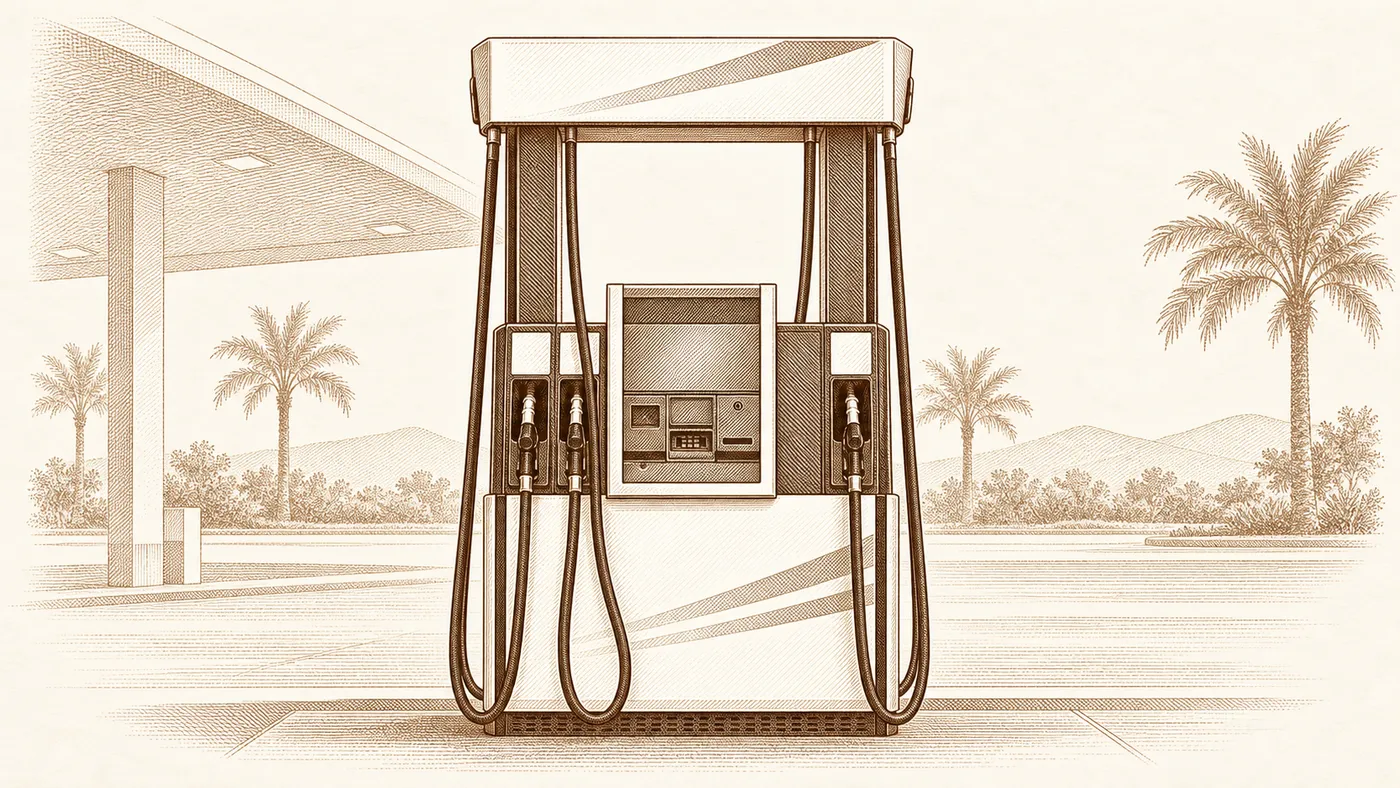
About this image
AI-assisted editorial illustration. Visual reference: Wayne Helix / Dover Fueling Solutions. Not a product photograph, installation drawing or test procedure; consult the applicable technical documentation.
In this article
- 01Divide the station into systems
- 02Build the baseline
- 03Assign frequencies with a source
- 04Separate authorities
- 05Measure closeout
- 06Condition- and evidence-based maintenance matrix
- 07Different sources for different decisions
- 08From finding to verifiable closeout
- 09Program change control
- 10Frequently asked questions
- 11Next step
“How often?” can only be answered after “which equipment, in what condition and under which requirement?” A fixed table for every station can create unnecessary work or leave a risk unattended.
Divide the station into systems
Organize tanks and lines; pumps and containment; dispensers and metering; monitoring; electrical and controls; drainage, civil works and safety. Assign each asset its identification, manual, condition and owner.
Build the baseline
The first review documents installed equipment, alarms, damage, water, suspected leaks, seals, calibrations, reports and open work. Critical findings trigger immediate action; the rest informs the plan.
Assign frequencies with a source
Every interval should state its basis: current requirement, manufacturer document, certificate, history, criticality or approved technical criterion. If the source is unavailable, the interval remains pending confirmation and is not published as a rule.
Separate authorities
BCBRP/DINASEPI, Acodeco, SNE and MIAMBIENTE have different responsibilities. A program should attribute inspection, metrology, energy policy and environmental matters to the correct source instead of using an agency name as a substitute for the exact obligation.
Measure closeout
The useful indicator is not “visit completed,” but a finding closed with evidence: asset, condition, work, functional check, owner and open items. The maintenance path gathers criteria for preparing and documenting that cycle.
Condition- and evidence-based maintenance matrix
A practical program combines planned controls with condition-based triggers. The calendar organizes resources; asset condition determines whether to inspect, correct, measure, or escalate. Every task should retain a source and closeout criterion.
| System | Signal or input | Evidence to retain |
|---|---|---|
| Tanks and lines | Water, alarms, differences, intervention, or applicable requirement | Identification, condition, scope, and report |
| Dispensers | Flow, leak, error, seal, repair, or metrological control | Diagnosis, part or measurement, and functional check |
| Containment and drainage | Liquid, damage, blockage, or spill event | Finding, action taken, and closeout verification |
| ATG and sensors | Alarm, communication loss, or inconsistent reading | Code, confirmed cause, action, and final status |
| Electrical and safety | Damage, overheating, trip, or authorized change | Isolation, qualified work, and documented return |
Different sources for different decisions
Acodeco describes metrological checks at stations, while Panamá Digital identifies the BCBRP/DINASEPI inspection procedure for storage facilities. These sources do not create one universal maintenance frequency; they help separate measurement, inspection, and equipment upkeep.
Each asset also depends on the manufacturer manual, installed revision, history, and site conditions. When two sources appear to call for different actions, record the discrepancy and seek validation instead of choosing the statement that produces the easiest calendar.
From finding to verifiable closeout
- Detect: record the symptom without assuming the cause.
- Prioritize: assess safety, environment, continuity, and applicable requirements.
- Authorize: define the responsible person, scope, and operating condition.
- Intervene: document actual parts, adjustments, and changes.
- Verify: perform the appropriate functional check or control.
- Close: deliver evidence, open items, and the next review condition.
An administratively closed work order with no check or visible pending item should not be counted as a resolved problem. The maintenance service page explains how to request a scope assessment.
Program change control
The program should change when the station changes. An expansion, equipment replacement, new fuel configuration, repeated alarm, or inspection finding can alter tasks and priorities. Record the date, reason, source, and approval for each change; retaining an earlier version without explanation can lead to work that no longer applies.
A simple dashboard can show overdue assets, open findings, pending evidence, and the next review condition. Its value depends on each status linking to a real report rather than merely to a checked box.
Frequently asked questions
Is there one frequency for every station?
It should not be assumed. Frequency depends on the asset, applicable document, condition, history, use, and interventions. Some signals require action before the next planned cycle.
Does a preventive visit guarantee there will be no failures?
No. Maintenance reduces uncertainty when it detects, corrects, and documents conditions, but it cannot eliminate every failure or replace inspections and authority decisions.
What information should the station manager receive?
At minimum: serviced asset, initial condition, work performed, verification, responsible person, evidence, and open items. The summary should support a clear next decision.
Next step
Start with an asset list and the latest available reports. To turn them into a condition-based program, use the maintenance learning path or arrange a station assessment.