How to assess a tightness-testing provider in Panama
Verifiable criteria for comparing method, scope, documentation and responsibilities without confusing a technical test with the authority’s decision.
Sales Manager

About this image
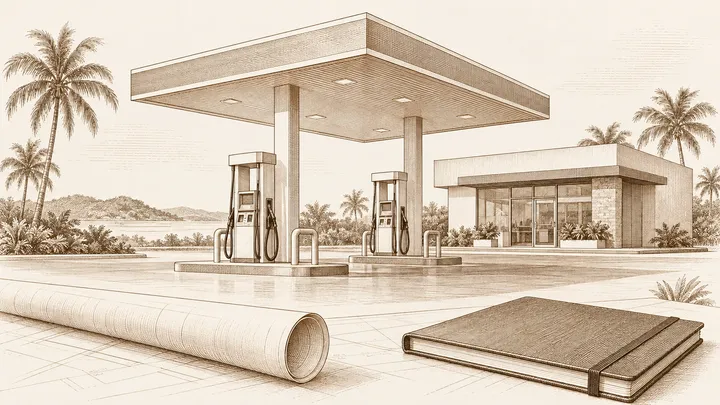
AI-assisted editorial illustration. Not a product photograph, installation drawing or test procedure; consult the applicable technical documentation.
In this article
- 011. Identified method and verifiable source
- 022. Written scope before testing
- 033. Equipment and report evidence
- 044. Separation between testing and certification
- 055. Responsible response to an adverse result
- 06Matrix for comparing proposals on the same basis
- 07Questions for the pre-test meeting
- 08How to assess experience without relying on an advertising number
- 09Frequently asked questions
- 10Next step
Choosing a tightness-testing provider requires more than checking an equipment brand or a promise of approval. A useful comparison starts with the exact method, the system included and the document the operator will receive.
1. Identified method and verifiable source
Ask for the full method name and its technical listing. For MESA 2-D, the independent California evaluation describes a nonvolumetric method that applies vacuum to the tank ullage, analyzes acoustic signals associated with air ingress and uses a separate water-ingress sensor. The listing also states the evaluation conditions and limitations.
2. Written scope before testing
The provider should identify the tanks, lines or other components included, together with product, capacity, level and relevant conditions. “Testing the station” is not a sufficient scope if the report cannot show what was evaluated.
3. Equipment and report evidence
Confirm equipment identification, pre-test controls, method criteria and report structure. The 0.1-gallon-per-hour rate published for MESA 2-D describes evaluated performance under defined conditions; it is not a volumetric reading required in every report or a universal Panama regulatory threshold.
4. Separation between testing and certification
Panamá Digital identifies the Fire Department, through DINASEPI, as the entity that inspects fuel-storage facilities. The provider performs and documents the technical work; the authority determines the procedure and its outcome.
5. Responsible response to an adverse result
A responsible provider does not guarantee approval before testing or claim that the method always locates the cause. It should explain how the system is kept safe, how the scope is reviewed and when diagnosis, repair or another test is needed.
Before requesting a quote, collect each tank’s identification, product, capacity, available level and the purpose of the procedure. That information makes proposals comparable.
Matrix for comparing proposals on the same basis
Two quotes are comparable only when they include the same system and deliverable. Ask each provider to answer the following points in writing, and mark as pending any response that depends on an inspection or document that is not yet available.
| Criterion | What the proposal should state | Warning sign |
|---|---|---|
| Method | Name, version or listing, and application conditions | Only mentions a brand or “certified equipment” |
| Scope | Tanks, lines, product, and conditions included | Promises to “approve the station” without identifying systems |
| Preparation | Information, access, and coordination required | Guarantees continuity or outcome before reviewing configuration |
| Report | Identification, method, conditions, result, and limits | Provides no sample or document structure |
| Adverse result | Safety, diagnosis, and retesting path | Hides limitations or automatically sells a repair |
The MESA 2-D technical page explains the method used by Master Services. If the objective relates to a procedure, also review the separation between testing and support for Fire Department certification.
Questions for the pre-test meeting
- Which document shows that the method applies to the tank and product?
- Does the proposal include lines or tanks only?
- What level, access, and operating condition does the method need?
- How will the report identify each tested system?
- What happens if the result fails the criterion or is inconclusive?
- Which activities remain outside scope and would be quoted separately?
How to assess experience without relying on an advertising number
Request evidence related to the scope: responsible personnel, equipment-control procedure, an anonymized report example, and an explanation of limitations. Years or job counts may provide context, but they do not replace competence for the specific configuration or authorize a promised outcome from the authority.
Also confirm how facility information is protected and who retains the reports. The operator should be able to retrieve the document, connect it to the correct tank, and present it with the remaining evidence when appropriate.
Frequently asked questions
Is the lowest-priced provider necessarily the highest risk?
No. Price alone does not establish quality. Compare scope, method, evidence, exclusions, and follow-up; a lower offer may be valid when it covers exactly the same need.
Does recognized equipment guarantee that the station will pass?
No. Equipment is part of the method, but the outcome depends on the tested system and test conditions. The authority retains its own decision over the procedure.
Should I repair equipment before requesting the proposal?
Document known findings first and share them. A repair may be necessary for safety, but it should not be performed blindly to alter the expected result.
Next step
Use this matrix to request equivalent proposals. To confirm the scope applicable to your tanks and lines, send the available identification before scheduling the visit.