Operations & preparation
Fuel tank emptying in Panama
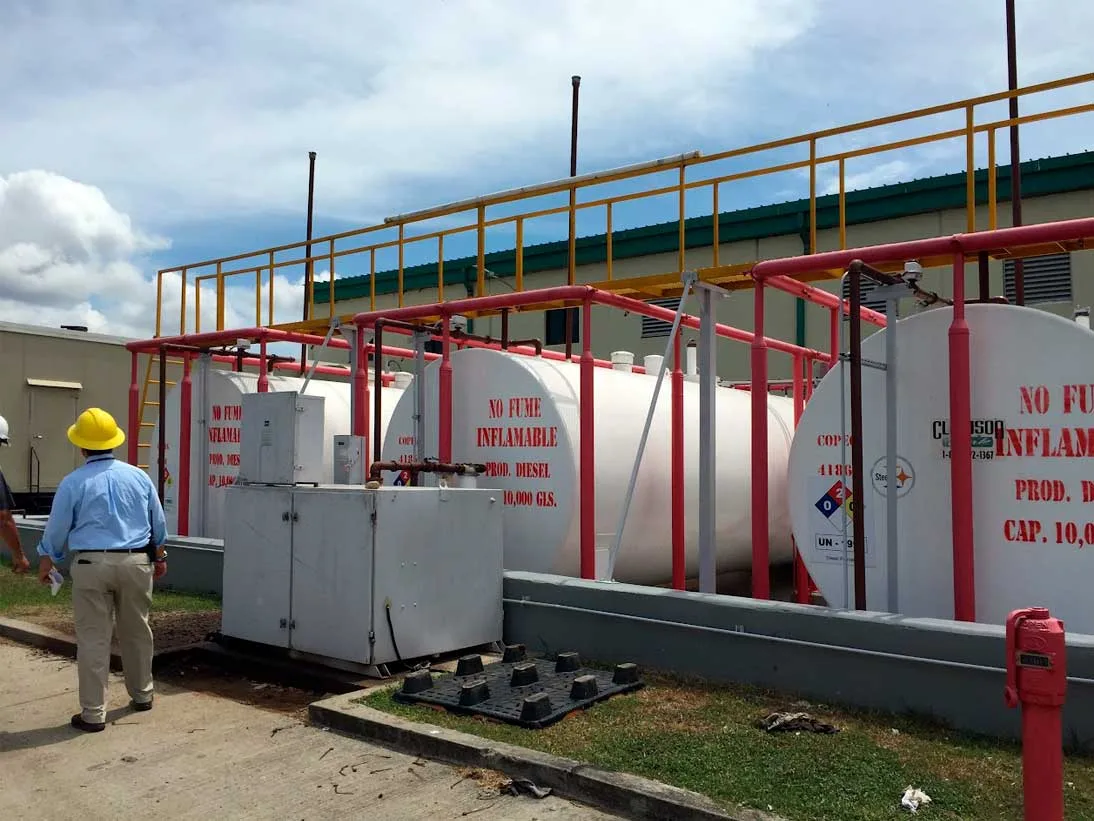
Fuel tank emptying in Panama is the controlled removal of remaining product and the cleaning of the tank so the station can move to the next intervention with a clear scope. It is not an isolated task and it is not defined by nominal capacity alone: you need to know what product the tank holds, why it is being emptied, what equipment is connected and what documentation must exist at closing.
Emptying and cleaning are coordinated as part of a larger job: E10 compatibility assessment, MESA 2D testing, tightness certification before the Fire Department, product change or decommissioning.
What fuel tank emptying in Panama includes
The scope begins before opening a lid or stopping a piece of equipment. First the operator's goal and the station's known condition are reviewed. Then the work sequence, the handling of remaining product, tank access and the information to be recorded are defined. If you are looking for a fuel tank cleaning service, this distinction matters: cleaning without defining the next step can force you to repeat part of the work.
Capacity also changes planning. A 10,000-gallon fuel tank is not scheduled the same way as a smaller one. Fuel type, present level, station configuration and operating availability determine logistics and intervention time. The goal is an emptying that is verifiable and useful for the work that follows — not just a tank left without product.
When to schedule fuel storage tank cleaning
There are five frequent situations that call for an evaluation:
- E10 assessment. The official schedule can change; check the dated regulatory status record before setting a date. Tank compatibility is reviewed by condition, material and exact documentation. See the E10 compatibility service too.
- MESA 2D test. Emptying may be part of preparation depending on tank condition and product. The method applies a vacuum and analyzes acoustic signals and water ingress within the defined scope.
- Hermeticity certification. To coordinate a certification before the Fire Department (DINASEPI) and applicable frameworks, the tank must be in conditions compatible with the inspection scope. See the hermeticity certification service.
- Product change. Switching products requires removing the remainder and reviewing what cleaning and evidence the new use requires.
- Decommissioning or remediation. When a tank stops operating or an incident occurs, emptying must be coordinated with the spill containment and repair plan.
Skipping the baseline is the most frequent mistake. Before intervening, the tank identification, product, capacity, reported condition, available readings and reason for the work should be recorded. That starting point lets you compare what is found against what was expected and keeps every observation in context.
Technical framework and documentation
The work is reviewed against the station's goal and the contracted scope. References may include NFPA 30 and NFPA 30A, DINASEPI and Fire Department criteria, plus the applicable SNE and MIAMBIENTE frameworks. For storage equipment testing and practices, PEI RP900 or PEI RP1200 references may also apply. The point is not to copy a normative list: it is to identify which requirement applies to the tank's real condition and what evidence must be delivered.
Closing documentation must distinguish between emptying, cleaning, inspection and any subsequent test. If the system includes a Veeder-Root or INCON ATG console, the information available from the system can be part of the survey. Master Services is a member of the Petroleum Equipment Institute (PEI).
Fuel tank emptying process
- 01Station survey. Product, capacity, tank identification, reason for emptying and on-site information are confirmed. The survey avoids calculating the work from an assumption.
- 02Planning and isolation. The intervention sequence, work area, coordination with the operator and the conditions to stop or keep operating are defined. If the tank feeds several dispensers, that relationship is identified before starting.
- 03Controlled removal of remaining product. Product is removed according to the agreed scope and tank condition. Volume, product type and the destination defined by the operator are recorded so the intervention is traceable.
- 04Cleaning, review and record. The planned cleaning is executed and the conditions found are documented. If findings change the scope, they are reported before continuing with a test or certification.
- 05Delivery and coordination of the next job. The closing brings together the executed scope, available evidence and recommendations for the next activity — MESA 2D, certification or E10 conversion — without losing the tank's history.
Related case
If you are reviewing Master Services work on station networks, see the Delta Galápagos project, where we replaced underground tanks at an operating station. For a diagnosis of your tank, the next step is not guessing capacity or frequency: it is documenting the current condition and the goal of the intervention.
Frequently asked questions
- What is fuel tank emptying?
- It is the controlled removal of remaining product and the planned cleaning of a tank to prepare for a test, a certification, a product change, an E10 conversion or a decommissioning. The scope depends on capacity, product, tank condition and the work that follows.
- When do I need to empty and clean a fuel storage tank?
- When preparing a station for E10, running a MESA 2D test, coordinating a hermeticity certification, changing the product or removing a tank. The initial evaluation defines whether emptying is necessary and what documentation must accompany it.
- Can you work with a 10,000-gallon fuel tank?
- Capacity is reviewed during the site survey. A 10,000-gallon tank requires defining the present volume, the product, access and the destination of the remainder before setting the work sequence. Request an evaluation to confirm the scope.
- Does tank emptying serve the Fire Department certification?
- It can be part of the preparation, but it does not replace the certification. The tank must end up in conditions compatible with the hermeticity scope and the documentation required by the applicable process before the Fire Department (DINASEPI).
- How does emptying relate to the MESA 2D test?
- Emptying may precede or be coordinated with the test, depending on tank condition, product and the diagnostic objective. MESA 2D applies a vacuum and analyzes acoustic signals and water ingress; the preliminary assessment determines whether the method and emptying apply.