Skip to content

Pillar

Dispensers

The dispenser is the visible point where fuel is authorized, measured and delivered. An unusual reading or flow requires identifying the unit and recording the symptom before any intervention. Here we cover system components, observable signs and when to escalate a fault to qualified personnel.
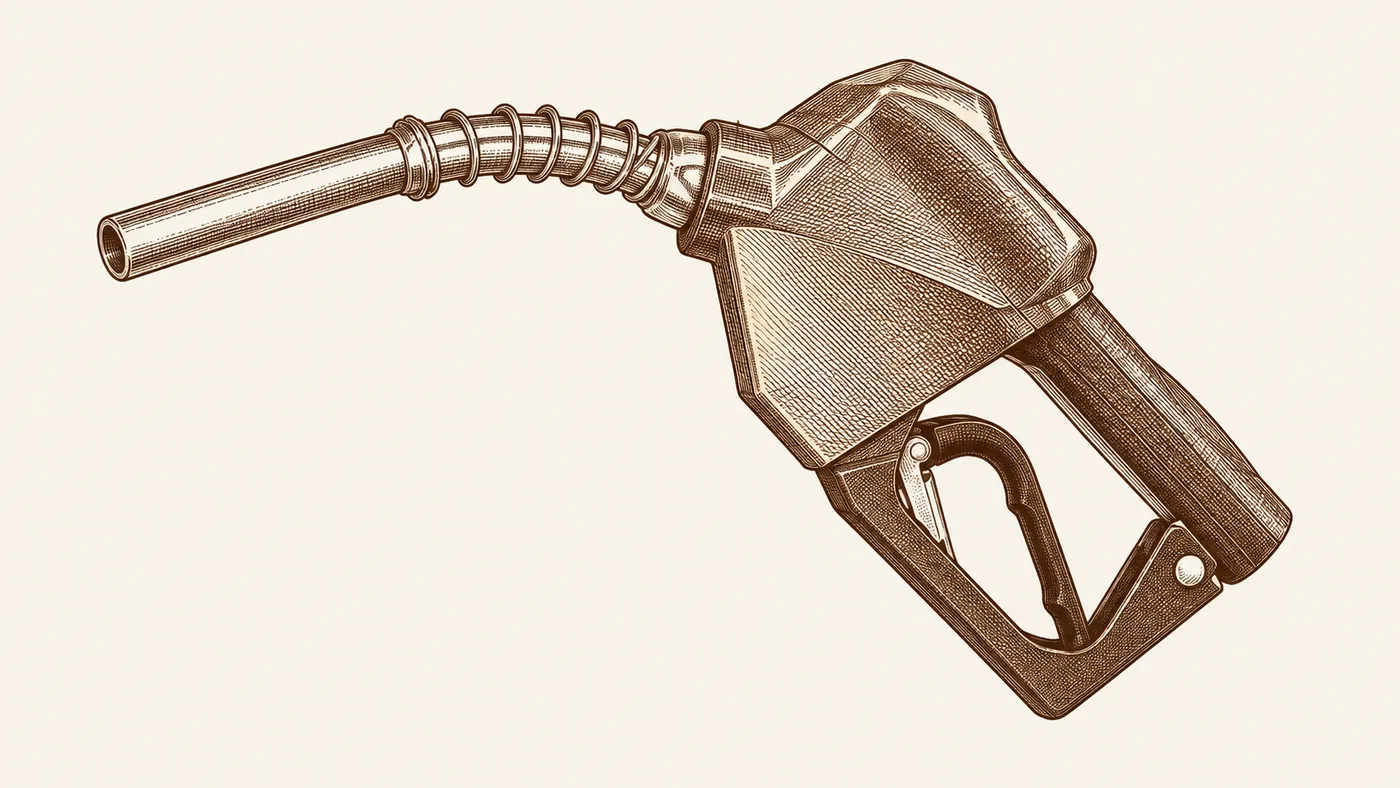
Editorial engraving of a fuel nozzle, based on the OPW 11 Series
AI engraving · Reference: OPW 11 Series.
Details & source

Editorial illustration, not a product photograph or installation drawing. Confirm the exact model in the manufacturer documentation.

Manufacturer documentation

Understand the system

Control signals and fuel delivery

These functions work together. This map helps locate a reported symptom; it does not establish the cause or the layout of a particular unit.

Control and transaction

  1. Power

    The electronics need power to display and control the sale. A blank display alone does not identify the fault.

  2. Authorization

    Enables the sale according to the site configuration: through the console or at the unit itself.

  3. Communication

    On connected units, the interface links the dispenser to the forecourt controller and allows transaction data to be transferred.

Fuel circuit

  1. Supply and filtration

    Fuel comes from the tank. In suction units, a pump inside the dispenser draws it up; in pressurized systems, the submersible pump in the tank pushes it. The filter traps particles in that circuit and loads up with use.

  2. Metering

    The meter records the volume passing through the unit, and a pulser turns that movement into the signal the electronics use to display volume and amount. Accuracy is checked through a metrological test; a driver’s impression does not establish it.

  3. Delivery

    Valves open and regulate flow according to the sale; the hose and nozzle carry fuel to the vehicle. The breakaway valve separates the hose if a vehicle drives off with it attached, and the shear valve beneath the dispenser shuts off flow if the unit is struck.

Original functional map by Master Services. Not a piping, wiring or installation drawing. Use the documentation for the exact model and configuration.

What happened at the fueling point?

Choose the symptom already observed during operation. Record what is known and what remains unconfirmed. Opening, testing or adjusting the unit belongs to personnel authorized for that work.

Leak or impact: follow the site emergency procedure and notify the responsible person before completing a report.

The display is blank

Record: Record the side and the time observed. If other affected fueling points are already known, identify them; otherwise leave the extent unconfirmed.

Report “blank display” without attributing it yet to a power outage or a damaged board.

Open the reporting sheet
The sale is not authorized

Record: Copy the message visible to the operator and note whether it appeared at the console, the dispenser or both. Exclude customer and payment data.

Include the console status if it is recorded. If there is no record, leave authorization unconfirmed in the report.

Open the reporting sheet
Authorized, but no fuel was delivered

Record: Describe what happened during that sale: message, grade, side and hose. Distinguish recorded authorization from assumed authorization. Note whether the pump was heard starting or not.

Note whether the counter advanced or remained at zero, and whether other hoses of the same grade are dispensing, only if this was already observed. Do not repeat a sale to complete the report.

Open the reporting sheet
Flow was slow or intermittent

Record: Identify the affected grade and fueling point, and whether it happens at one hose or at every hose of that grade. Record whether the symptom was continuous or intermittent and when it was first reported, without conducting a flow test.

That detail guides the technician: a symptom at every hose of a grade points to the shared supply; at one hose, to that unit. Keep units and dates with any existing readings, without concluding that the filter is blocked.

Open the reporting sheet
The nozzle does not shut off, or shuts off early

Record: Identify the side, hose and grade, and whether it happened once or keeps happening. If there was a spill, treat it as an incident first.

If the nozzle does not shut off automatically, take that hose out of service following the site procedure until a technician checks it. Do not adjust or take apart the nozzle.

Open the reporting sheet
The display or receipt does not match

Record: Identify the two records you compared. Separate volume, total amount and unit price, and note the price the unit displayed. Record the observed difference and units; use a transaction reference without personal data.

A different unit price at the dispenser and the console explains many amount differences. If a metrological result exists, include its date and reference; without that test, the report does not confirm a calibration error.

Open the reporting sheet
There is a visible leak or impact damage

Record: Incident response takes priority over the worksheet. Notify the responsible person, use the emergency stop if the site procedure calls for it, and follow that procedure.

Do not reproduce the fault or approach to take a photo. Complete the record and technical review when the responsible person confirms it is safe.

Open the reporting sheet

Give the technician a useful record

Identify the site, unit, side and grade. Add the visible message, time, recurrence and any existing service references. Keep observations separate from suspected causes.

The sheet is not sent or saved by the website. It does not authorize work or issue a certificate.

Manufacturer references and scope

Sources checked on 8 October 2026. They describe particular products and configurations, not requirements for every station in Panama. The reporting prompts are our own editorial synthesis.

Safety while refueling

Switch off the engine and do not smoke while refueling. These precautions appear in guidance from Panama’s Fire Department and PEI’s Stop Static campaign.

The Fire Department’s September 2015 guidance says to notify station staff if fuel is spilled. Follow the site’s safety instructions.

Articles

Glossary

Breakaway
A coupling on the dispenser hose that separates and shuts off fuel if a driver pulls away with the nozzle still in the tank.
Shear valve (impact valve)
An emergency valve at the dispenser base, designed to shut off flow after impact separation or thermal activation, depending on the model. It reduces the risk of a fuel release; correct installation and maintenance are essential to its operation.
Technical reference: OPW 10 Series

Two questions

Check your understanding

Choose an answer, then compare it with the explanation. This exercise does not authorize technical work or issue a certificate.

1. What is a shear valve designed to do?
Read the explanation

Answer: Shut off flow after impact separation or thermal activation, depending on the model.

It is an emergency device. Its operation depends on installation and maintenance; it is not a guarantee that a fuel release can never occur.

Read the shear-valve entry and its manual
2. What information helps prepare a service visit for a dispenser with low flow?
Read the explanation

Answer: The model, affected fueling position, symptom and when it occurs.

Describing the symptom helps define the assessment. Low flow alone does not establish which component needs repair or replacement.

Read the guide to filters and flow

Use the review exercises at the end of each topic.

Other topics

Need a technical assessment?

Tell us which equipment you have and what you need assessed so we can define the service scope.

Request an evaluation
Conceptual engraving of a fuel station
Conceptual illustration
Image details

AI-assisted editorial engraving. Not a photograph of a Master Services project.